Easily one of the top attractions in all of New York City, the National September 11 Memorial and Museum is a place of remembrance right in the center of the rebuilt World Trade Center area. With a focus on reflection and healing rather than sorrow or fear, the memorial creates a space of serenity rarely found in such a hectic city.
You should make time to visit this attraction when you come to NYC. It’s not often you tour a space that almost everyone feels some connection to. This travel guide will help you plan ahead so you know what to expect and can make the most of your visit.
What to see at the 9/11 Memorial
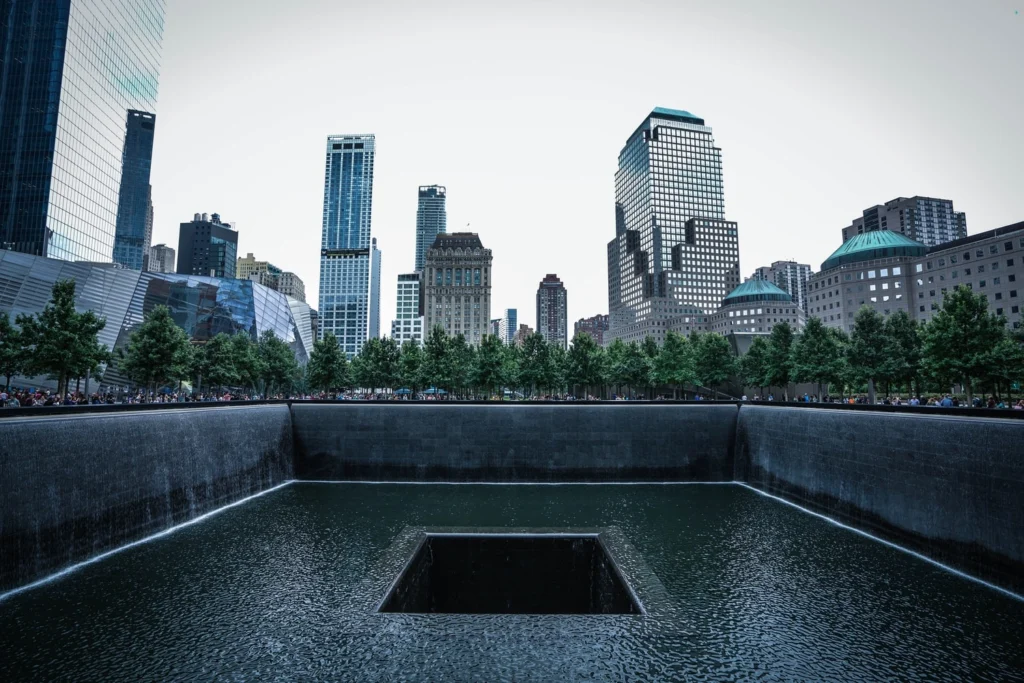
Titled “Reflecting Absence,” the memorial was designed by architect Michael Arad and landscape architect Peter Walker. It won an international design competition that fielded more than 5,000 entries from all over the world.
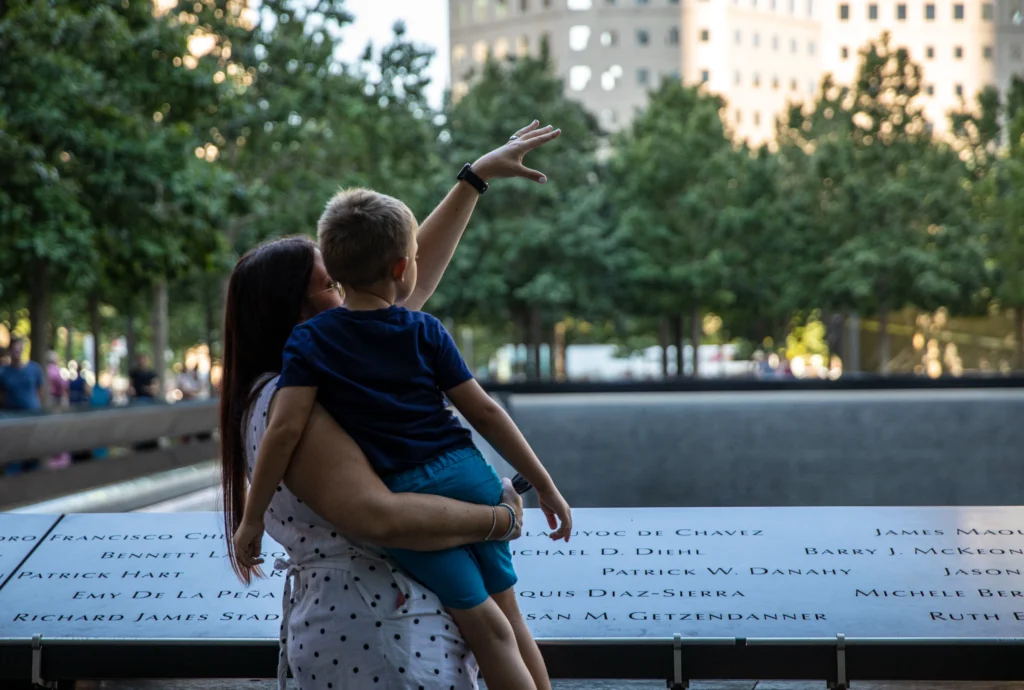
When you enter the memorial and walk past some rows of swamp white oak trees, you’ll come to one of two memorial reflecting pools, which are sunken into the plaza within the footprints of the original twin towers of the World Trade Center. Their shape and location are designed to emphasize the absence of those towers. The cascade of water that pours from the rim creates a peaceful atmosphere.
This is one of the highlights of our guided tour of Ground Zero, and it’s truly a moving sight to behold.
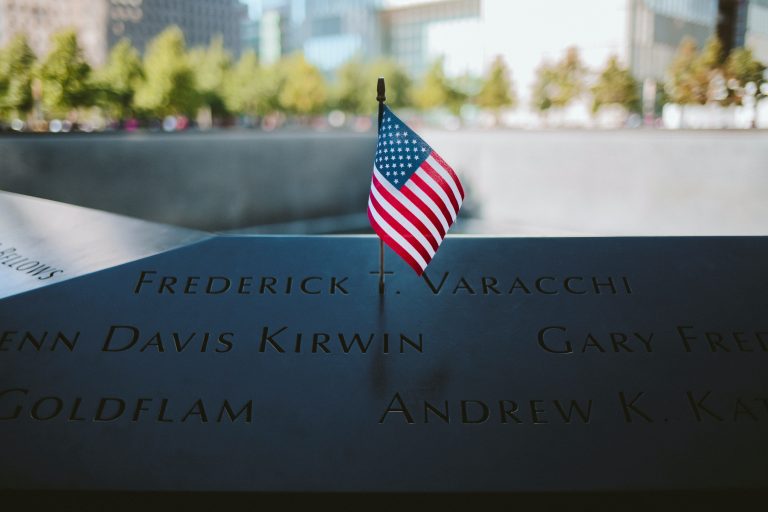
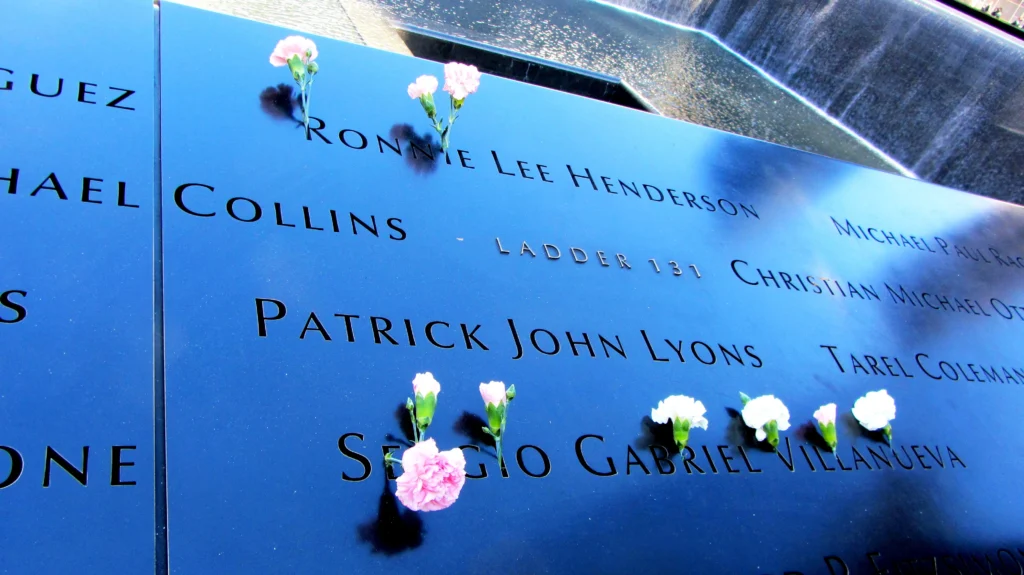
The names of 2,983 people are inscribed on the bronze parapets that frame the pools. These are the names of all victims of the 9/11 attacks as well as the 1993 bombing at the World Trade Center. To be precise, the names are fully carved out from the bronze (so what you’re seeing are the outlines), emphasizing the absence of all those people.
As you walk around and look at the names of the victims, you’ll notice they’re not listed alphabetically but rather by affiliation. Employees of a company are grouped together. So are the crew members and passengers of each flight. The memorial designers also accommodated about a thousand requests from families to keep certain names — friends, relatives, close colleagues — next to each other. These are called “meaningful adjacencies.”
To find a specific victim’s name, you can search the museum’s online directory on your smartphone (if you don’t have internet access, ask a memorial volunteer for help). The search will return a letter and number combination that matches a panel number on either the North or South pool.
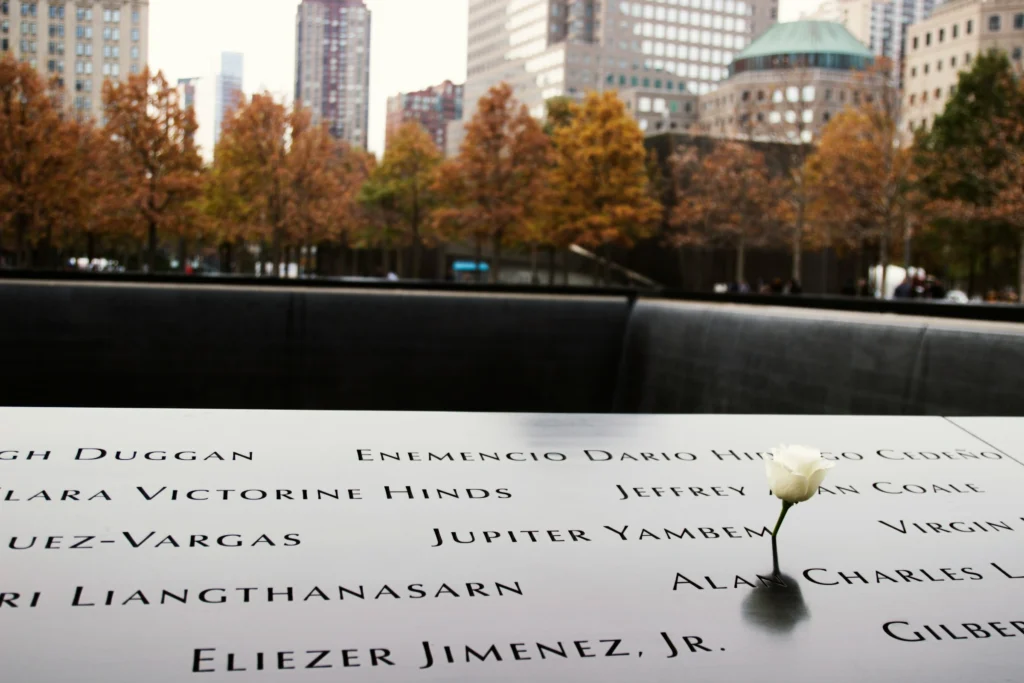
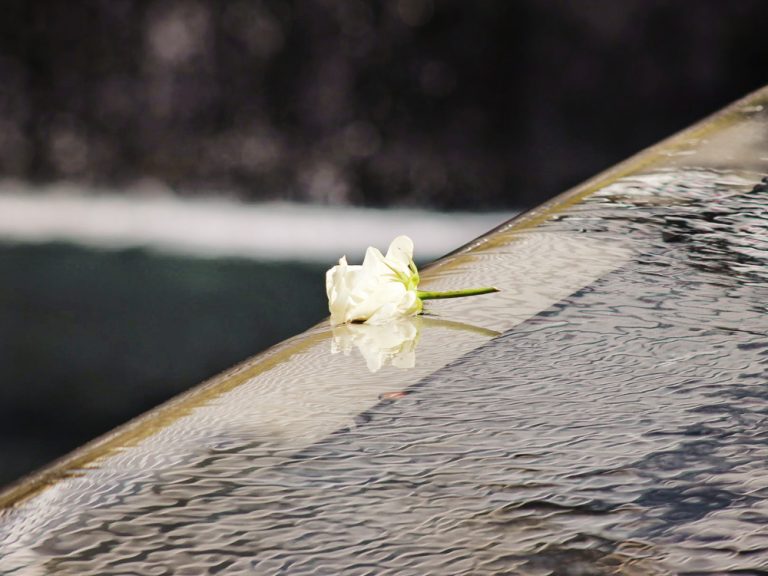
You might also notice short-stemmed white roses placed in names on the parapets. If you see a white rose in someone’s name, it means that today is their birthday.
You’ll notice that no matter where you stand, you can’t see the bottom of the center part of the pool. This is meant to symbolize the unending impact of loss. The water pours down the void to a place we cannot see and the pool never fills up, symbolically representing the void in our city, our heart, our soul (or however you interpret it) that can never be filled.
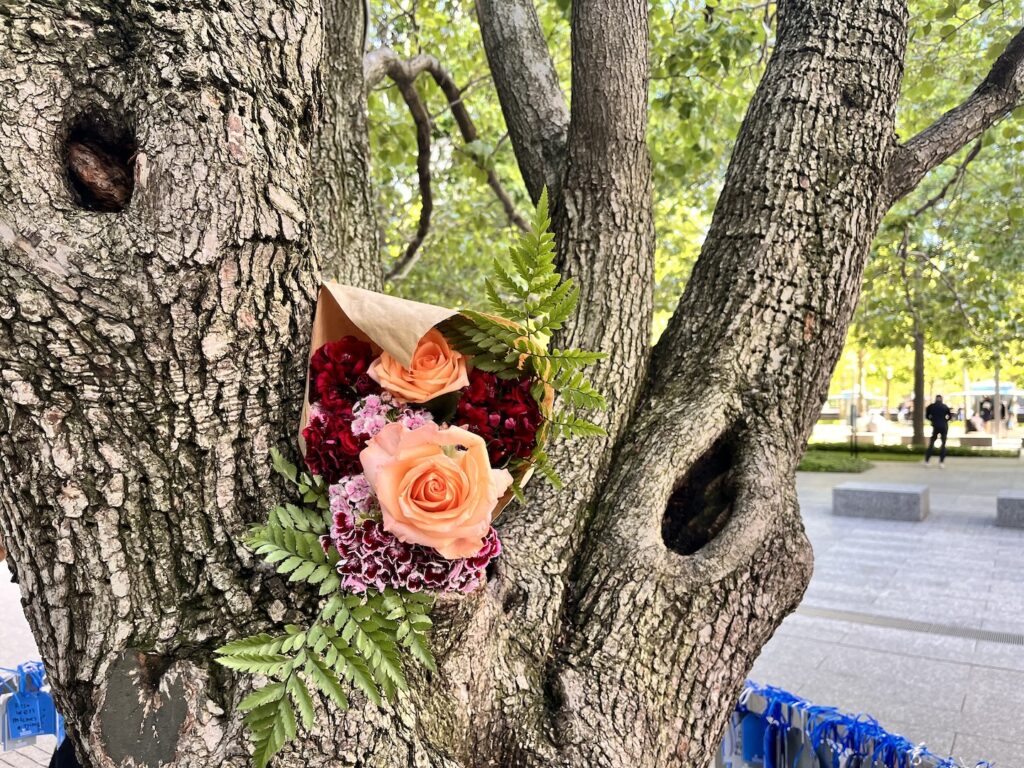
Walking around the memorial, you’ll notice a few other symbolic components. Next to the south pool is the Survivor Tree, the last living thing pulled from the rubble of Ground Zero more than a month after the attacks. The burned and damaged tree recovered and now stands as a living symbol of survivorship after a tragedy.
Behind the tree, the Memorial Glade, which opened in 2019, is dedicated to the thousands of individuals who have gotten sick or died since Sept. 11, 2001, due to their exposure to toxins in the WTC debris and in the air around Ground Zero.
Visiting the 9/11 Museum
 Credit: David E. Starke
You could take a stroll through the memorial, pay your respects, and head out. But visiting the 9/11 Museum adds to the entire experience.
The museum pavilion, located in between the two pools, houses a security checkpoint, screening room, and cafe. The actual museum exhibits and halls are underground.
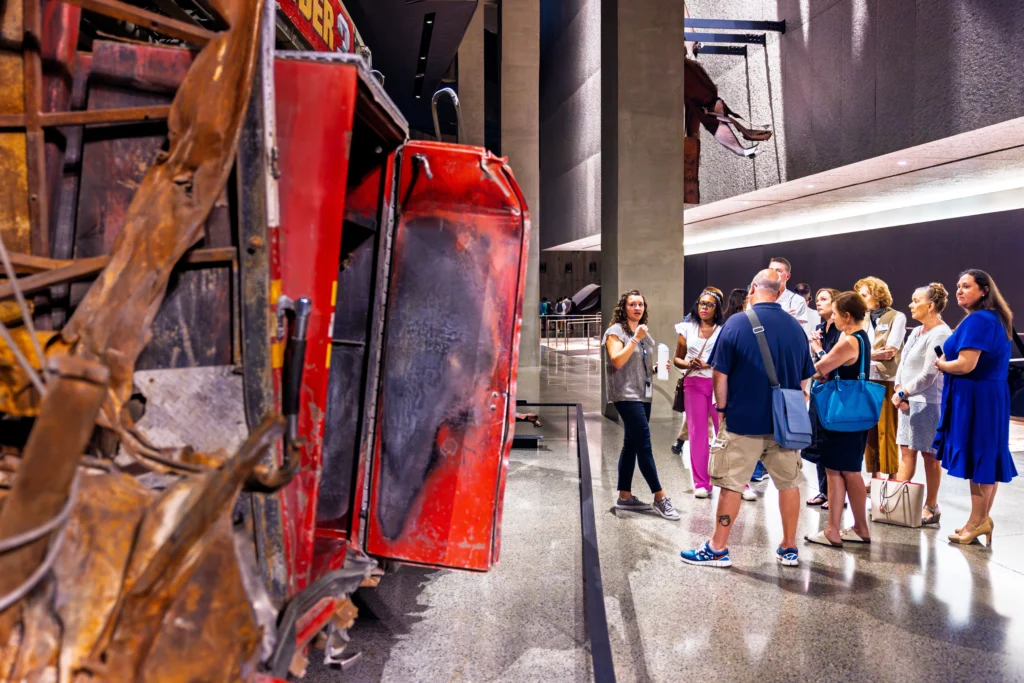
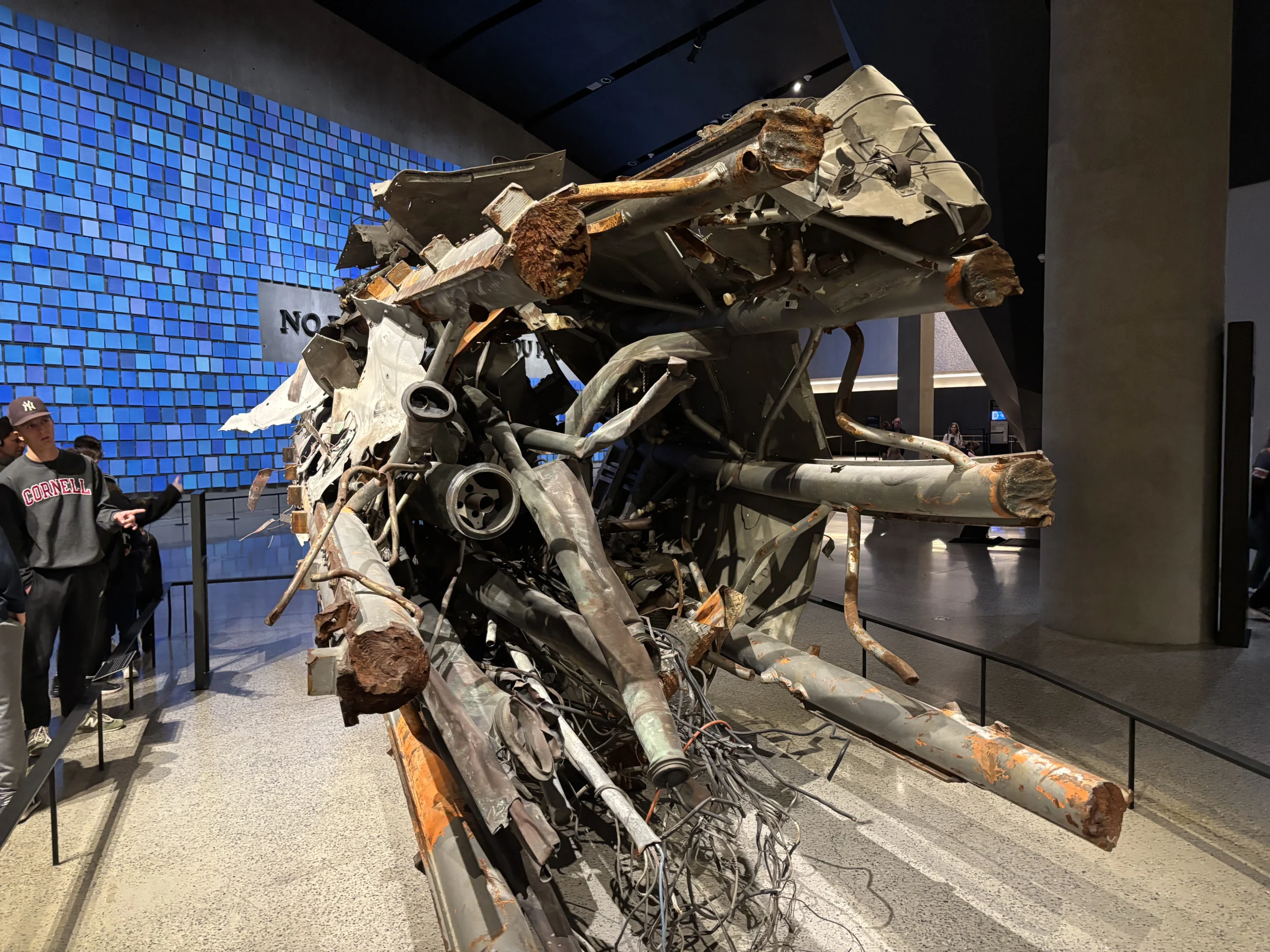
The museum showcases thousands of artifacts, photographs, videos, oral histories, artwork, and more to help tell the many stories of 9/11. The exhibits are incredibly detailed and take you step-by-step through the events of the day as well as the aftermath. It can be difficult to walk through at times — reliving the tragedy isn’t easy — but alongside heart-wrenching stories come inspiring moments of awe.
The amount of information is impressive, so be sure to allow enough time. The traditional recommendation is two hours, but you can easily spend up to four if you’re trying to see everything.
You’ll find individual stories about the thousands of victims, soundscapes of oral histories, works of art created after the attacks, remnants of the original buildings and the foundation, and video footage and images you may not have seen before. The time you will spend is more than worth the money.
You can explore the museum on your own, with the help of an optional audio guide, or with a live tour guide. The museum’s expert tour guides begin with an overview of what happened on 9/11 and then bring you through several areas of the museum while recounting narratives and showing you different exhibits. Their mission is to honor the victims and offer visitors a helping hand with understanding the impact of that tragic day.
Local tip: You can book the guided tour online directly with the museum or by choosing our VIP All Access Tour, which also includes a ticket to the fantastic One World Observatory at the top of One World Trade Center.
How to visit Ground Zero
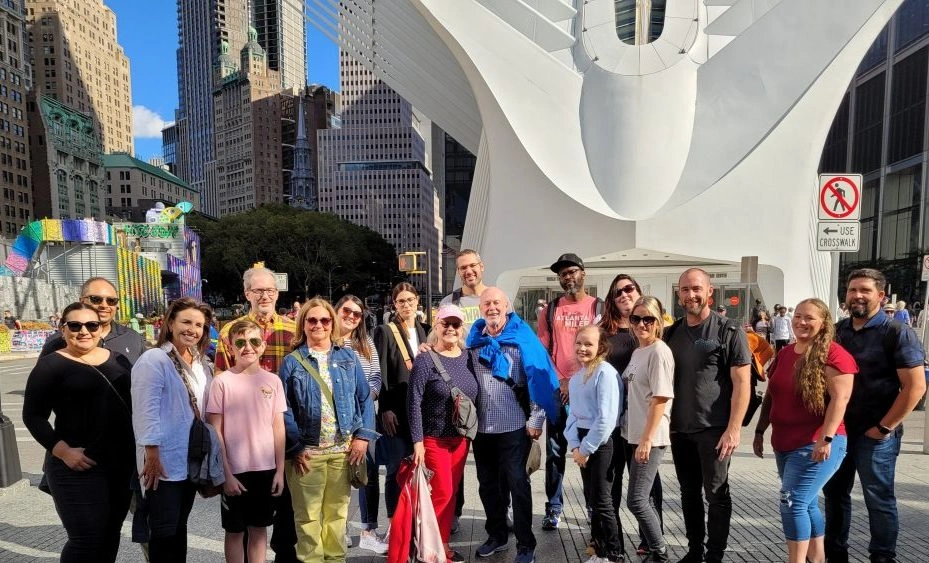
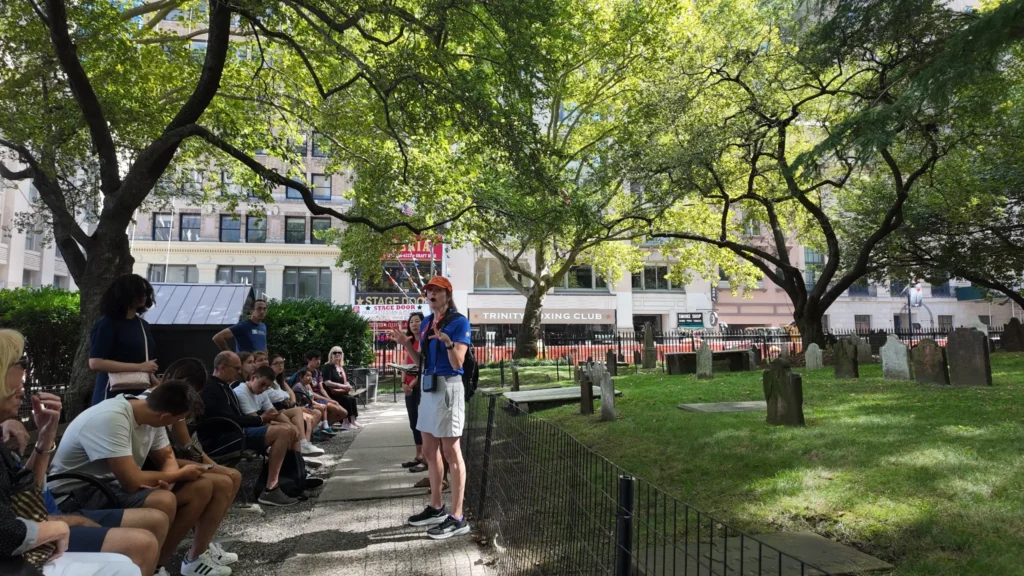
As New Yorkers, we’re probably biased. We think the best way to experience Ground Zero is to go with a local. It’s one way you can actually experience this place — it’s not just looking and seeing but also hearing the stories of the day.
That includes firsthand accounts from someone who was in New York during the attacks as well as the many other stories of heroism and bravery and, yes, loss.
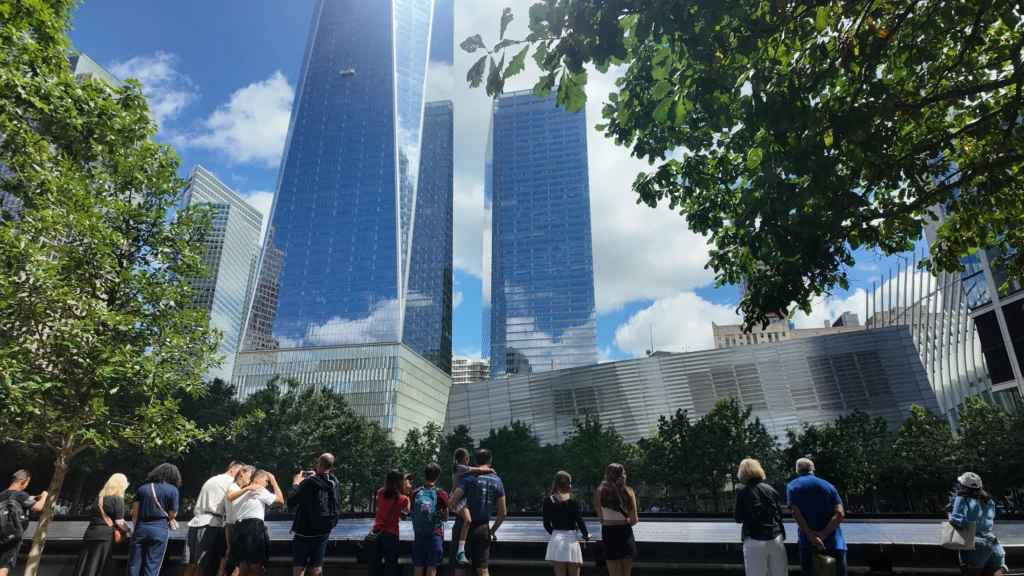
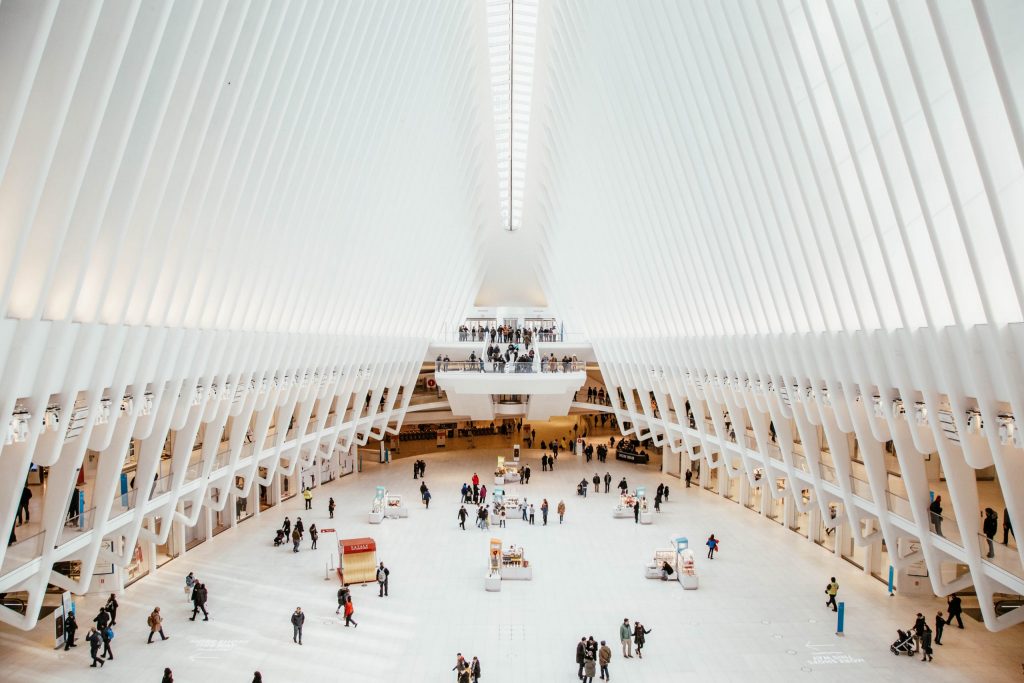
Walking around the memorial is always special, but going with a guide helps focus your visit. You’ll also see more than just the memorial. Our tour begins inside the Oculus, the shopping and transit hub in Ground Zero.
And if you want to visit some of the other places here at Ground Zero, like the One World Observatory and the 9/11 Museum, we can include tickets for those as well. All three together are a great way to get a holistic view of this area, from the solemn beauty of the 9/11 Memorial to the impressive technology and panoramas at the OWO.
What to see and do near Ground Zero
There’s so much to experience close to the 9/11 Memorial in walkable Lower Manhattan. Here are a few of my favorites.
World Trade Center
Surrounding the memorial plaza is a series of skyscrapers that make up the World Trade Center. The tallest building is One World Trade Center, otherwise known as the Freedom Tower, which opened in 2014. The top of this building is home to One World Observatory with beautiful views of New York City, northern New Jersey, and New York Harbor.
It’s a great place to stop before or after your visit to the memorial. A block away from the memorial plaza is 7 World Trade Center, which opened in 2006. Just to the east of the memorial are 3 World Trade Center and 4 World Trade Center, which opened in 2018 and 2013, respectively.
Liberty Park
Liberty Park is across the street from the south end of the memorial plaza. This elevated public space is home to St. Nicholas Greek Orthodox Church and National Shrine. Opened in 2022 after a long delay, this beautiful church replaced the original St. Nicholas, which was destroyed on 9/11.
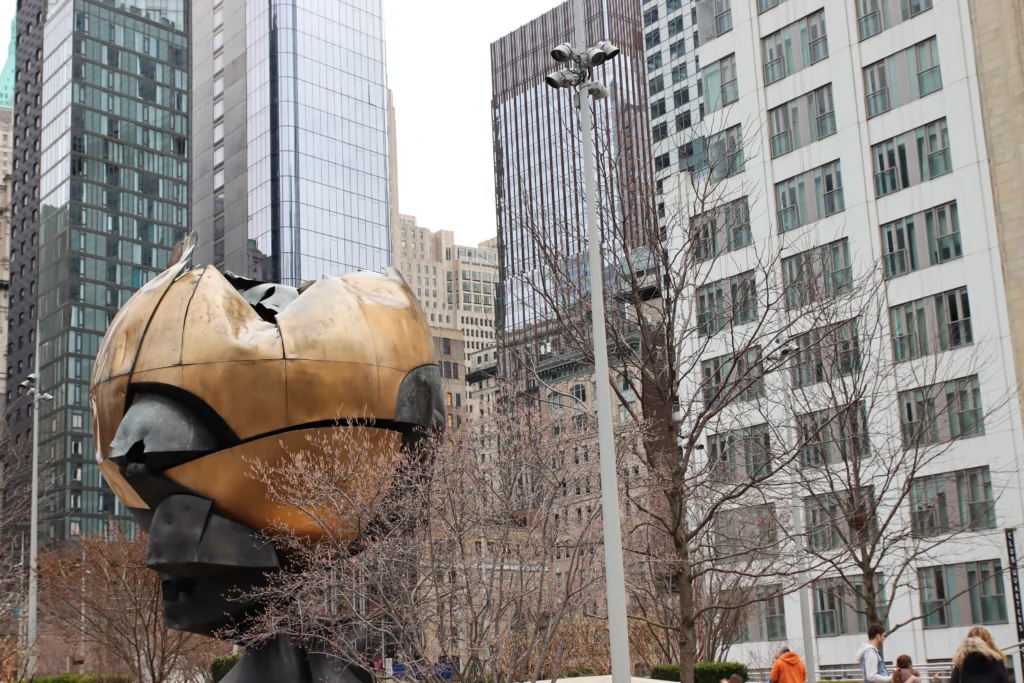
Also in Liberty Park, just steps from the church, is a 20-ton bronze sculpture known as “The Sphere,” created by German artist Fritz Koenig. This sculpture was originally the centerpiece of the public plaza at the World Trade Center. It suffered significant damage in the collapse of the towers but the spherical shape survived. “The Sphere” is now displayed exactly as it was found in the remains of the twin towers, the visible damage remaining as a reminder of the day.
FDNY Memorial Wall
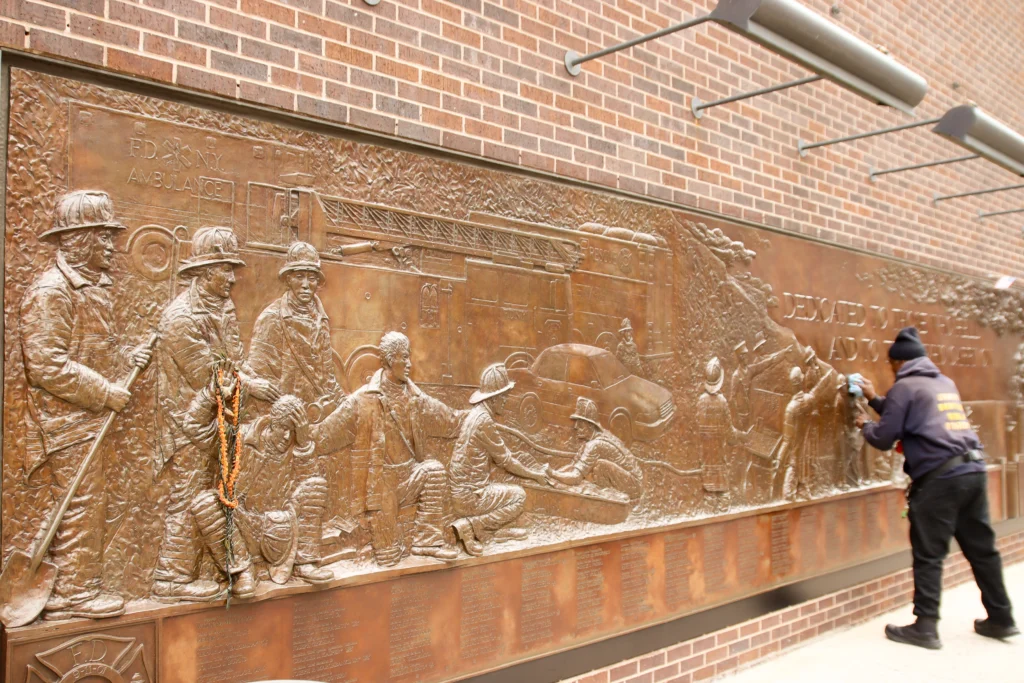
East of Liberty Park is the FDNY Memorial Wall, a bronze bas-relief sculpture installed on an exterior wall of a firehouse. The sculpture depicts firefighters responding to the burning towers and lists the names of the 343 members of the FDNY who died that day.
It’s frequently a stop on our Ground Zero walking tour.
The Oculus
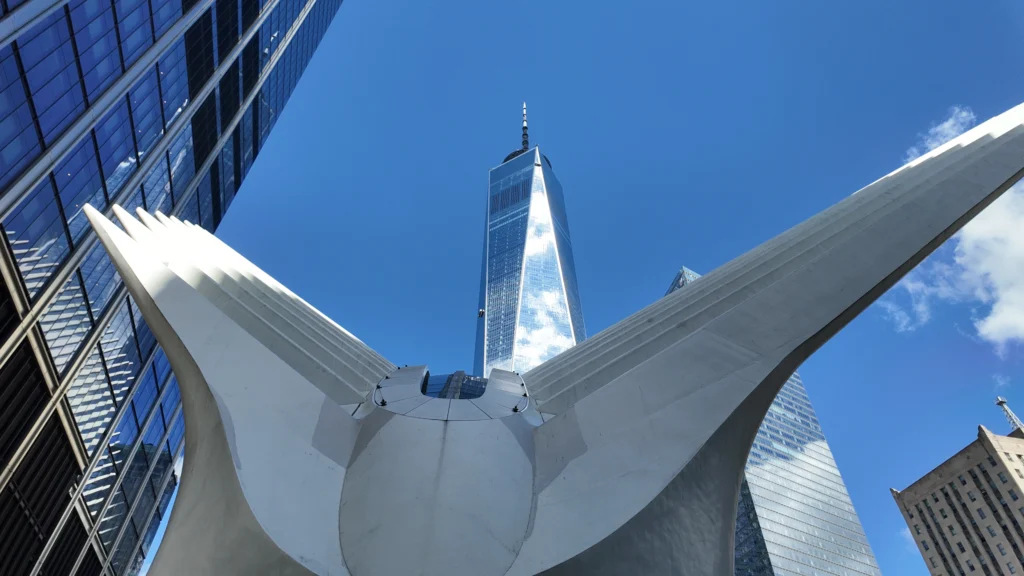
The Oculus, a white structure topped with giant wings just east of the memorial, contains shops, eateries, bathrooms, and connections to multiple subways lines and a train to New Jersey.
Follow the halls of the Oculus underneath the memorial, and you’ll come to Brookfield Place, another shopping center with a great food court and access to a beautiful walkway along the Hudson River.
PAC NYC
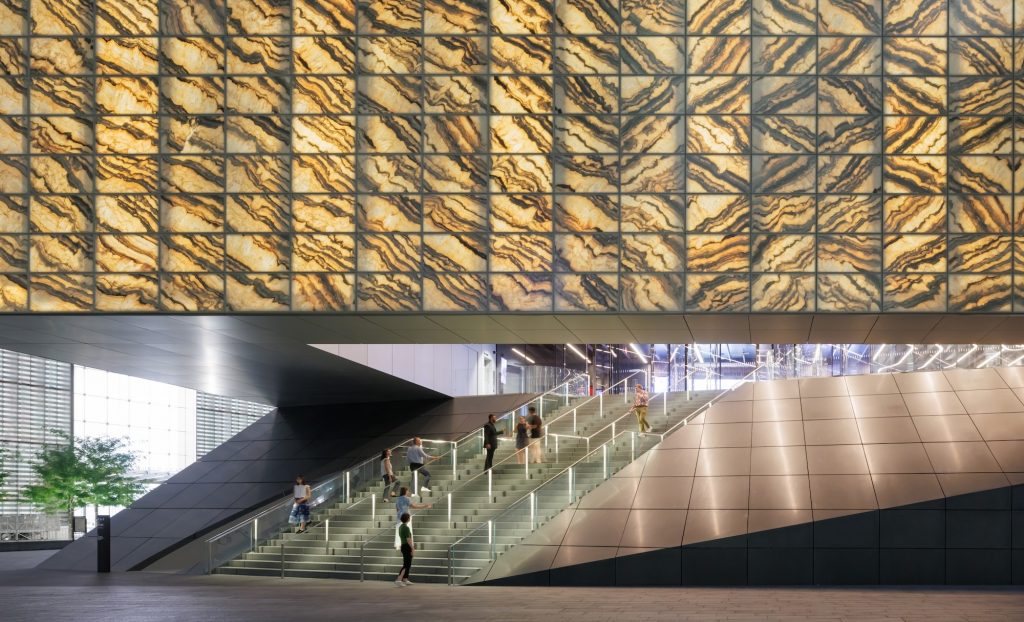
You can enjoy music, dance, opera, theater, and film at the Perelman Performing Arts Center, located just north of the memorial plaza. PAC NYC, as it’s known, features three stages and a restaurant called Metropolis by Marcus Samuelsson.
St. Paul’s Chapel
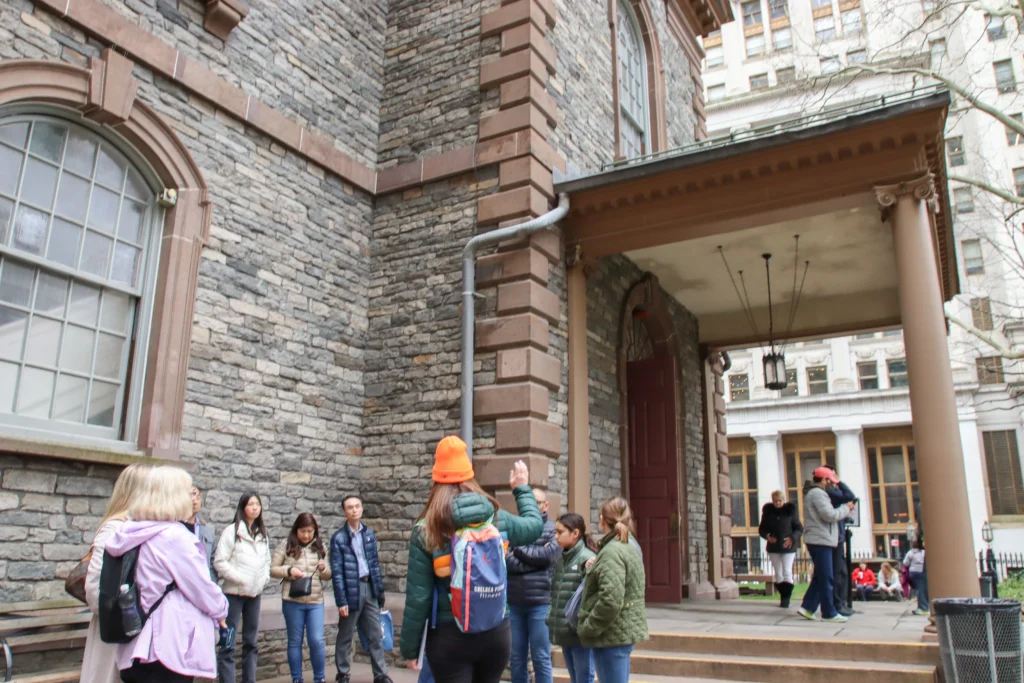
If you’re interested in exploring further connections to 9/11, visit St. Paul’s Chapel at the intersection of Broadway and Fulton Street. The chapel became a sanctuary for rescue and recovery workers for months after the attacks.
Farther walks
From Broadway you can easily walk south to Trinity Church, the New York Stock Exchange, or the Battery, where a great view of the Statue of Liberty and Ellis Island awaits.
Alternatively, a five-minute walk north on Broadway from St. Paul’s will bring you to City Hall and the entrance to the Brooklyn Bridge. If the weather is good, you can stroll across the bridge and explore Brooklyn Heights and DUMBO.
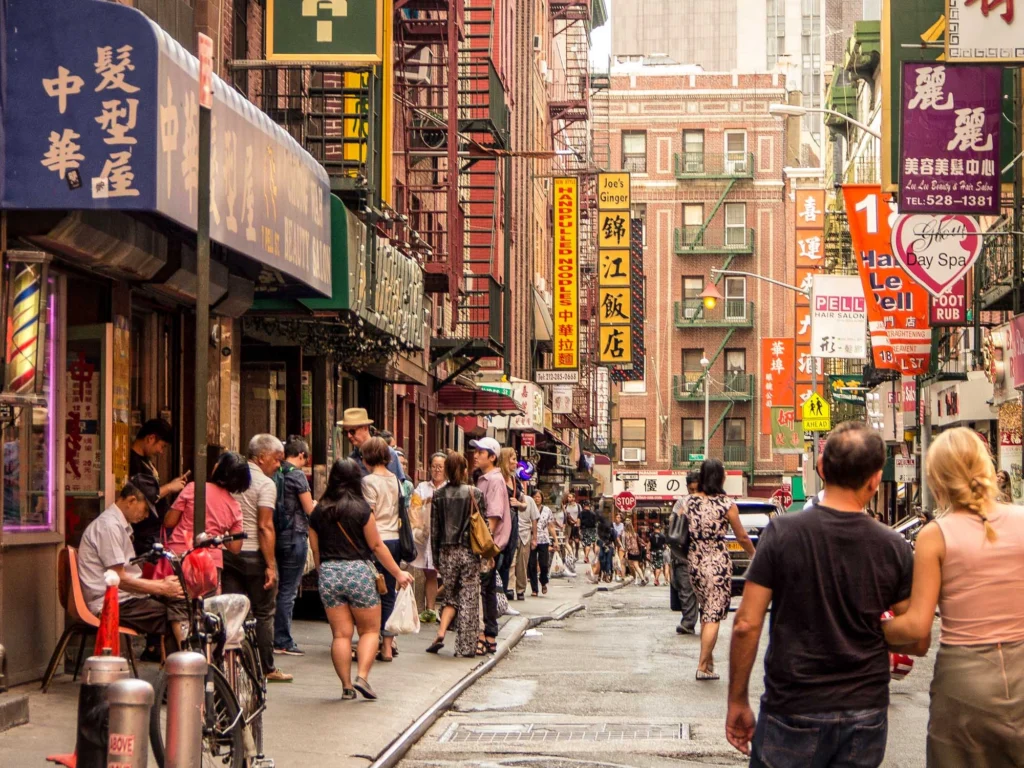
But if you prefer to stay in Manhattan, then head uptown from City Hall and explore Canal Street and Mott Street in Chinatown. Head over to Mulberry Street to grab Italian cookies and cannoli at Ferrara’s in Little Italy.
Bonus: Why not tack on some shopping in SoHo? It’s another neighborhood close by.
How to get to the 9/11 Memorial
Credit: Jin Lee, 911 Memorial & Museum
The 9/11 Memorial and Museum’s official address is 180 Greenwich Street, New York, NY 10007, which is in the Financial District. The area is bustling with locals and tourists alike and you have plenty of options when it comes to transportation.
Subway
We recommend getting there by subway. The closest stops are WTC Cortlandt (1 train), Cortlandt Street (R or W trains), and World Trade Center (E train). Fulton Street station (A, C, J, Z, 2, 3, 4, or 5) is also nearby.
Here are your full options:
- E to World Trade Center
- 1 to WTC Cortlandt
- R or W to Cortlandt Street
- A or C to Chambers Street
- A, C, J, Z, 2, 3, 4, or 5 to Fulton Street
- 2 or 3 to Park Place
Whichever train you take, you’ll emerge either on the street very close to the memorial or inside the Oculus, which is just across the street.
Car
We strongly recommend you take public transportation instead of a car because of heavy traffic congestion, closed streets due to security, and limited (and very expensive) parking.
That said, if you decide to use either Uber or Lyft, enter “9/11 Memorial and Museum” as your destination and you should be good to go. If you’re taking a yellow cab, tell the driver you’re headed to the 9/11 Memorial in Lower Manhattan. Once you get out of the car, you might be confused, but just look for a collection of trees surrounded by towering skyscrapers.
If you’re driving, the Battery Parking Garage at 70 Greenwich Street is going to be your best bet. Just keep in mind that the garage is still about a 7- to 10-minute walk away from the memorial.
PATH
If you’re coming from certain places in New Jersey (Newark, Harrison, Jersey City, and Hoboken), you can take the PATH train to the World Trade Center (it’s the last stop). You’ll disembark the train and emerge inside the Oculus.
Extra tips for your visit
Here are some tips to help you prepare for visiting the memorial and museum.
How to visit a memorial: Be respectful
The memorial is sacred ground. It is a tribute to thousands of people who died. It is also considered the final resting place for hundreds of victims — indeed, a repository of unidentified remains is located underground.
With that in mind, please don’t:
- shout or speak too loudly
- play amplified music
- smoke or vape
- throw anything, including coins, into the pools (they’re not wishing wells)
- lean, sit, or stand on the parapets (this includes your children)
- place bags, coats, or other objects on the parapets
You’re welcome to take photos and leave items of respect (flowers, flags, etc.), but again, be mindful of others.
Security
Be prepared for heavy security. Museum security is very similar to the airport with metal detectors and scanners. Alcohol, glass bottles, outside food and drinks, recreational wheeled vehicles, weapons, and explosives are all prohibited inside the museum.
For the memorial, you don’t have to go through any type of security to enter, but you’ll see many police officers and security guards keeping an eye on things.
Accessibility
The entrance to the museum is wheelchair-accessible, and elevators and escalators are offered wherever there are stairs. Personal mobility devices are welcome, and manual wheelchairs and walkers are available to borrow free of charge on a first-come, first-served basis at coat check.
My experience at the memorial
There is so much significance to both the memorial and museum in light of the impact the tragedy has had. As a New Yorker and a guide for ExperienceFirst, I think what makes the memorial so exceptional is that it turns a universal event into an extremely personal encounter.
Everything about the memorial is meant to be experienced. You’re meant to see, hear, and touch the water, a natural substance and the simplest representation of life. And you’re meant to interact with the names, too, by touching them, bathing them in the water from under the parapets, and leaving a flower, flag, or a note, perhaps.
My favorite part of the memorial, the Survivor Tree, isn’t solely a symbol for New York City — it supported many other cities as part of the seedling program, which ran from 2013-2023. During those years, the program selected three communities around the world affected by either mass violence or natural disasters to receive tree seedlings taken from the Survivor Tree. The program was a beautiful message of comfort and resilience.
9/11 Memorial and Museum: Frequently asked questions
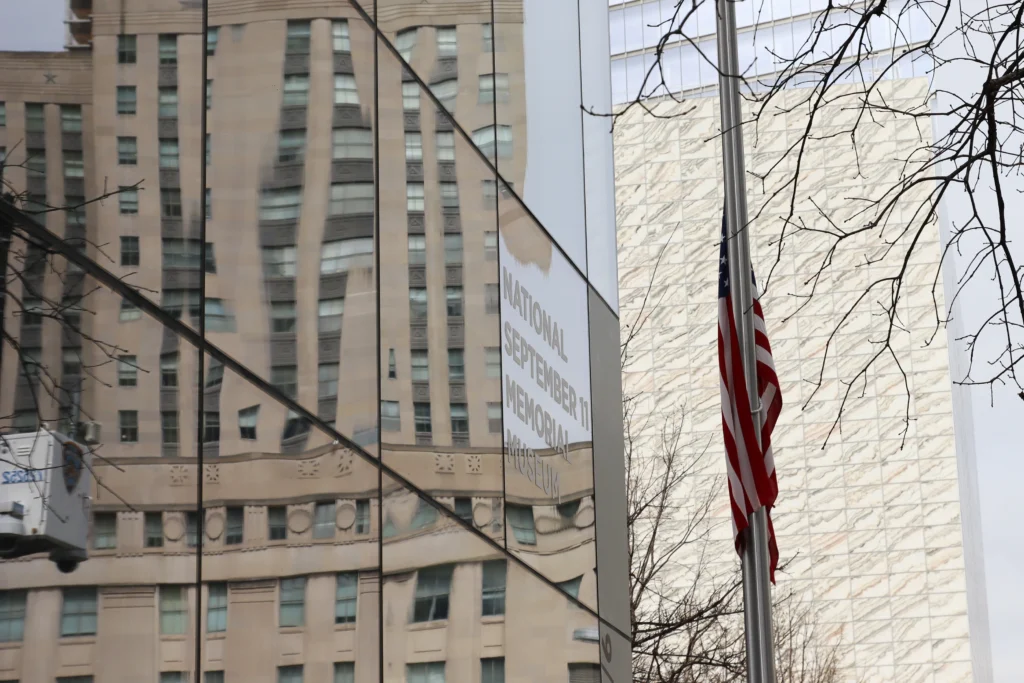
Still have questions about visiting the 9/11 Memorial and Museum? We’ve got you covered.
Are both the memorial and the museum free?
The memorial is free, but you must pay to visit the museum. Currently, tickets range from $24-$36. Guided tours and audio tours cost extra.
Admission is free for active duty and retired U.S. military service members with valid ID.
You can also get free museum admission for up to four people on Monday evenings from 5:30 p.m.-7 p.m. However, availability is limited and you must reserve those complimentary tickets in advance online.
We have several Ground Zero tour options, whether you’re looking to tour only the memorial or want to upgrade to visit the museum (with or without a guide) and the One World Observatory.
How late are the memorial and museum open?
The memorial plaza is open daily from 8 a.m.-8 p.m.
The museum is open Wednesday-Monday from 9 a.m.-7 p.m. The museum is open on select Tuesdays throughout the year and has extended hours around the holidays.
Can I visit on September 11?
Every year on September 11, the memorial and museum are closed to the public and reserved for family members only. However, at night you will witness the “Tribute in Light” — two beams of blue light shot into the sky to represent the image of the towers.
Read our guide to when the memorial and museum are open on 9/11 for more details.
Should I bring my kids?
Children are welcome throughout the memorial and the museum. You know your kids better than anyone, so if you think they’ll be respectful and understanding, then bring them along.
The museum is educational for students. It can be a useful tool for them to understand the significance of this event in America’s history. Just be aware that some of the exhibits (such as the Historical Exhibit) are graphic and aren’t recommended for children under 10. These areas have signs posted to warn guests, so you’ll be prepared if you think your child can handle it.
Going forward
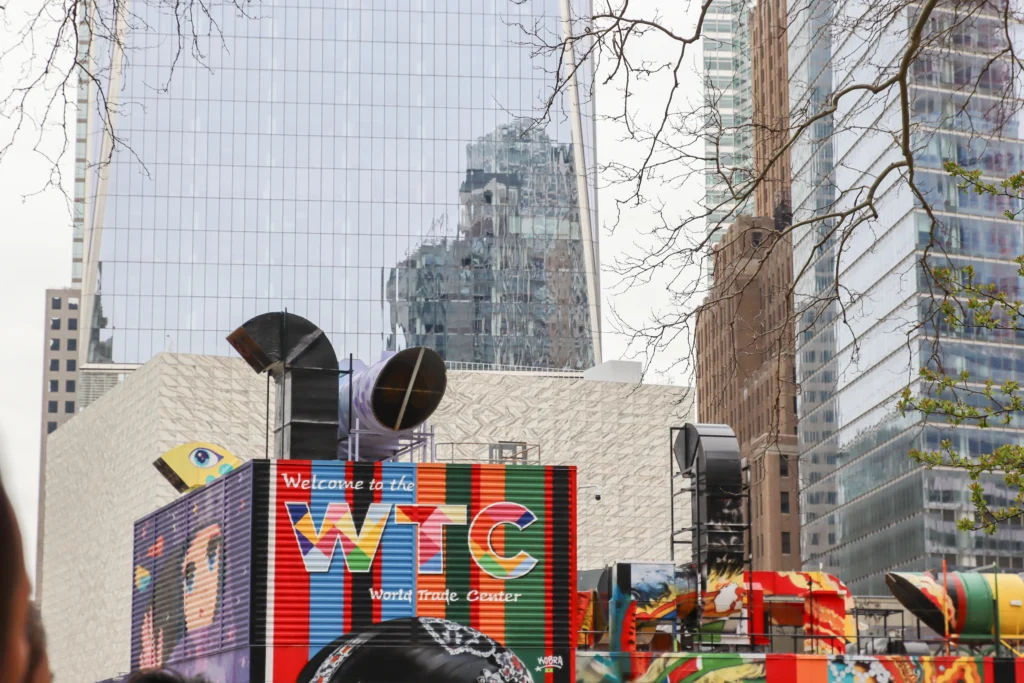
No other destination in New York represents the power of memory and emotion quite like the 9/11 Memorial and Museum. After you visit, you’ll understand how 9/11 was not exclusively a New York City or even an American tragedy — it was felt by many around the world.
You can’t understand New York’s history without spending the time to reflect on the September 11th attacks at the memorial and museum. The tragedy is part of this city’s DNA. The brave men and women who gave and risked their lives will always be remembered.
Walking around the memorial and the museum, you’ll realize there’s never a reason to give up hope. You’ll experience New York at its lowest and darkest point — yet as you continue your journey through the city, you’ll be inspired by its ability to heal and to thrive.
And you’ll be reminded that there’s really no other place in the world like New York.
Additional reporting by Arun Kristian Das